Rules
Ecommerce Listing Language: Material Claims and Care Lines
Ecommerce listing language clarifies material claims and appearance terms, names the care-label rule, and shows how return wording shapes buyer expectations.
What to take away
- Listing accuracy can affect returns and the chance that a first order becomes a second.
- Appearance words such as silk touch or gold tone describe a look or feel; they do not replace accurate material disclosures.
- In the United States, deceptive product claims are a compliance matter under the FTC Act, not a copywriting choice.
- Care instructions and final-sale terms shape buyer expectations. Check them before publishing.
- Every measurement and photograph you publish is a support ticket you never have to answer.
Listing copy is a retention input
A shopper who receives a product that contradicts its stated fiber content may return it. That creates outbound and return shipping work, takes staff time and can put the customer relationship at risk.
Retention work counts discounts, email cadence and loyalty points. It rarely counts the product row that produced the order. The benchmarks that decide whether a listing cost is worth carrying sit in ecommerce marketing strategy benchmarks.
Read your own listing as a stranger would. Then ask which sentence a buyer could hold you to. Sentences that survive are the ones worth keeping.
Illustrative trade ranges put apparel returns near 20 to 30 percent, well above most non-apparel categories. The band moves with fit, sizing and season.
Three families of listing words
Almost every phrase on a product row belongs to one of three families. Sorting them is most of the work.
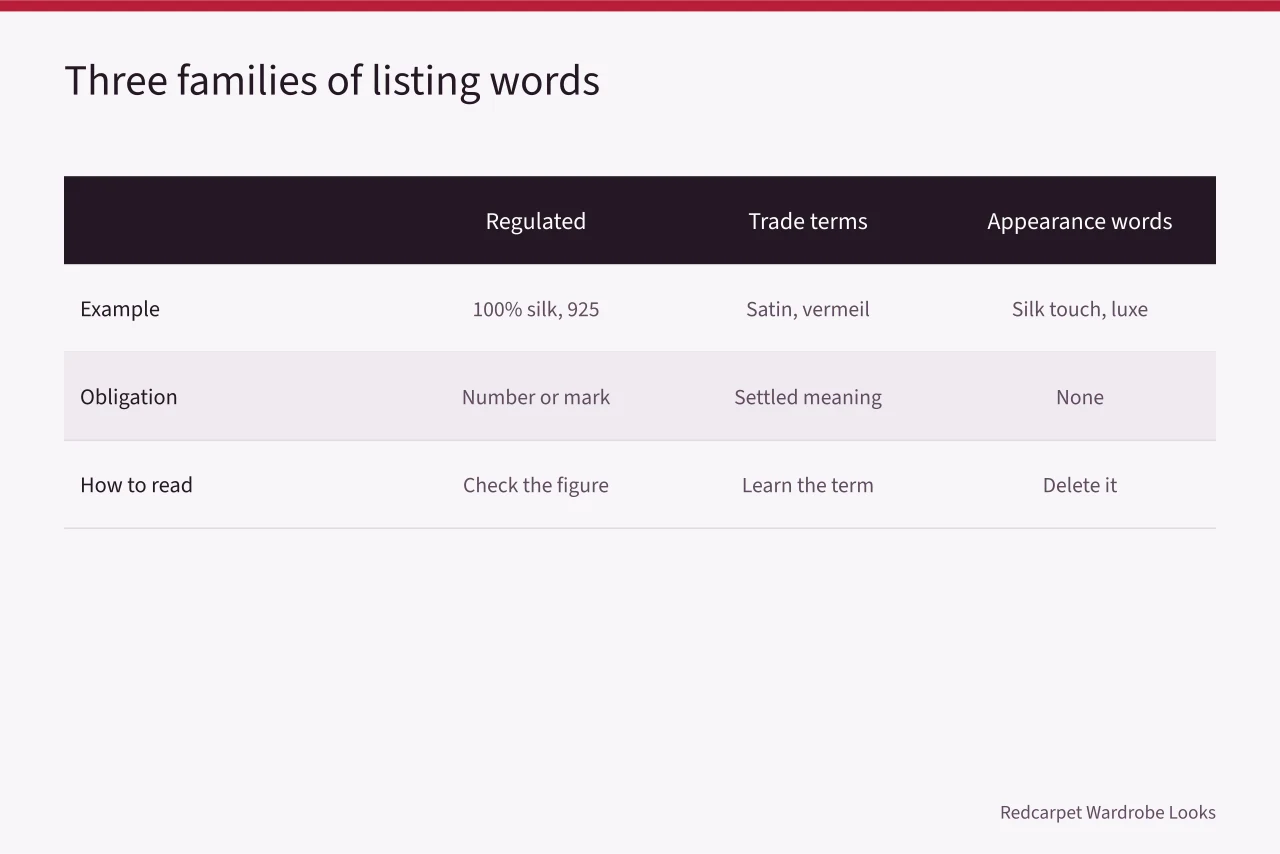
Regulated descriptions. Fiber content is not a style choice. The Textile Fiber Products Identification Act imposes mandatory content disclosure on textile products, and its rules sit in 16 CFR Part 303. Precious metal fineness and lab-grown claims are covered by the FTC's Jewelry Guides at 16 CFR Part 23. A number or a mark should sit beside them.
Settled trade terms. Satin, twill, crepe, vermeil and plated mean something exact. Buyers can check them, and so can you.
Appearance words. Silk touch, gold tone, leather look and luxe describe an impression, not a verified material. They do not exempt the full listing from truthful claims.
Shop-the-look tiles add a fourth layer: exact, similar, as seen, sold out and sponsored. Each label carries its own duty, from ad disclosure that the tile is sponsored to the affiliate attribution window behind the click and the returns terms that follow a sold-out look.
What the FTC actually polices
Section 5 of the FTC Act reaches unfair or deceptive acts, and it applies to the words on a product page.
A 100% silk claim over synthetic content draws scrutiny. A silk-touch claim describes feel rather than fiber, but the overall impression still must not mislead.
That distinction is the whole compliance question. Fix the checkable claims and the adjectives look after themselves.
Example: a jewelry row read for retention
Read the row the way a buyer would. Each phrase commits the seller to something, or to nothing.
| Phrase | What it commits you to | Return effect |
|---|---|---|
| 100% silk | A regulated fiber claim | Low if accurate |
| Silk touch | Hand, not material | High if mistaken |
| Vermeil | Gold over sterling | Low if stated |
| Gold tone | Finish on base metal | High if read as gold |
| One size | A fit assumption | High without measurements |
| Final sale | No returns protection | Kills the repeat order |
Run the same read across a whole catalogue with the ecommerce marketing strategy checklist, then work the four steps below.
- Drop each appearance word and read what remains.
- Attach a number to every material named.
- Check the care line against the garment's care requirements.
- Check the final sale tag before anything else.
Care lines, final sale and the return policy
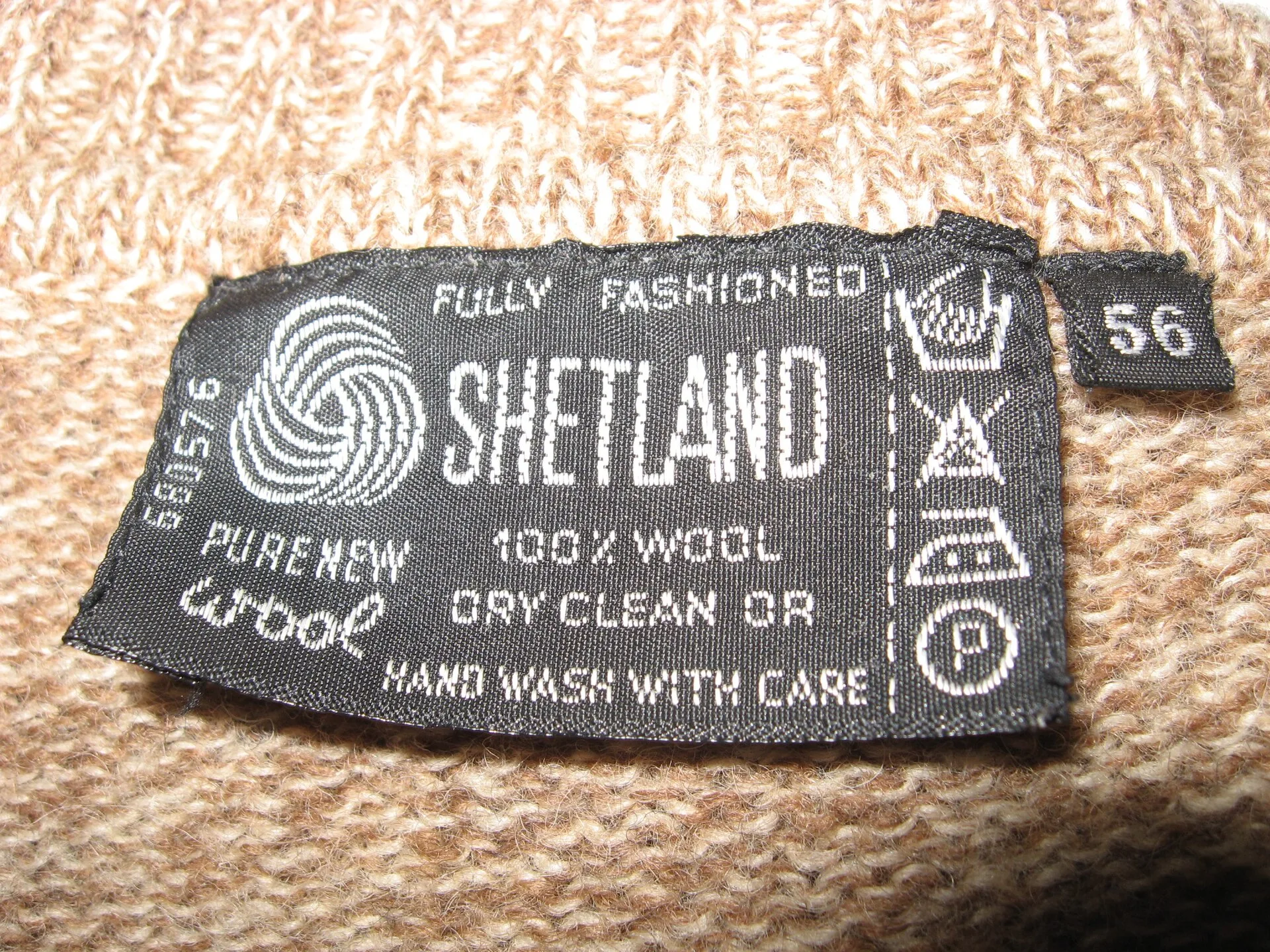
Dry clean only tells the buyer that routine care requires professional cleaning. On wearing apparel sold in the US, care instructions are required under the FTC's Care Labeling Rule, 16 CFR Part 423. The label must give applicable washing, bleaching, drying and ironing instructions, along with needed warnings.
A final-sale tag communicates a seller's policy for ordinary returns; it does not make an inaccurate listing accurate or erase other legal obligations. Common structures include buyer-paid return shipping, seller-paid return shipping, and eligibility only within a stated window. State the actual return window and who pays shipping in the policy so buyers do not have to infer them.
Recurring billing language and cancellation terms
Recurring-billing listings carry a second vocabulary: cancel anytime, pause, skip and free trial. Each phrase should describe an option the customer can actually use, and the listing should match the cancellation flow.
Do not call cancellation easy or anytime unless the actual flow supports that description. Flows that survive review share habits collected in ecommerce marketing strategy best practices.
Common questions
Do appearance words ever break the law?
Rarely on their own. They turn into a problem when a listing implies a material, a percentage or a mark that is not there. That is where a claim becomes deceptive.
Which listing field cuts returns fastest?
Flat measurements and customer photographs. Both let a buyer check fit before the order ships. Both also remove the most common reason a shopper sends an item back. Size charts are a practical fix on this list.
Should final sale items stay in the catalogue?
Only where the product and customer expectations support the decision. A saved return is not necessarily a saved customer; consider whether the restriction makes a future purchase less likely.
Do customer photographs change anything?
They give buyers a second read on fit and color, which is where most apparel disputes begin. The strategy case studies cover review integrity and the way buyers weigh photographic evidence.