
Strategy
8 steps to improve customer retention for small businesses
How to improve customer retention for small businesses in 8 steps: a definition, cohorts, interviews, time to value, service recovery, messages, billing, tests.
Retention improves when decisions follow evidence rather than a calendar of promotions. Work through the eight steps in order. Each step names the condition you should check, the action to take and a rule of thumb to carry forward. Make one change at a time and keep customer choice in view.
Step 1: Define what counts as a returning customer
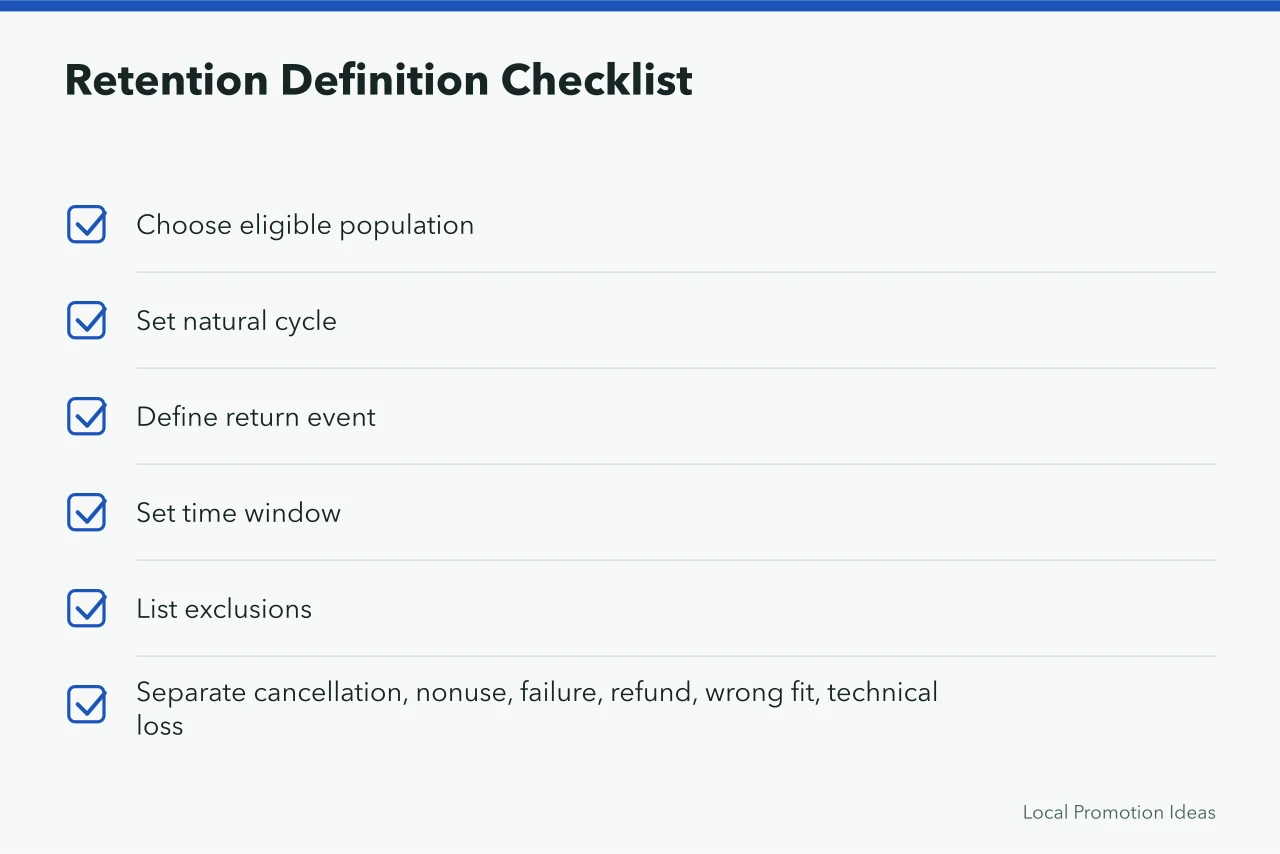
If the team cannot say who qualifies, what action counts as a return, and how long a customer has to take it, define those terms before judging results. A stable measure helps prevent an apparent improvement that comes only from changing the population, return event, or observation window.
Set the eligible group, natural purchase cycle, return event, measurement window, and exclusions. For example, a coffee seller could count first-time buyers making a second paid purchase within six weeks of delivery, against a four-week bag cycle, while excluding refunded, wholesale, and staff orders. Use the repeat-purchase rate as context, not as a substitute for a consistent store-level definition.
- Rule of thumb: Set the measure before reading the result.
Step 2: Compare cohorts over equal time
If one group has had longer to buy again than another, compare customers over equal periods before crediting a change. Group people by their first purchase or start date, then measure the same return action after the same elapsed time.
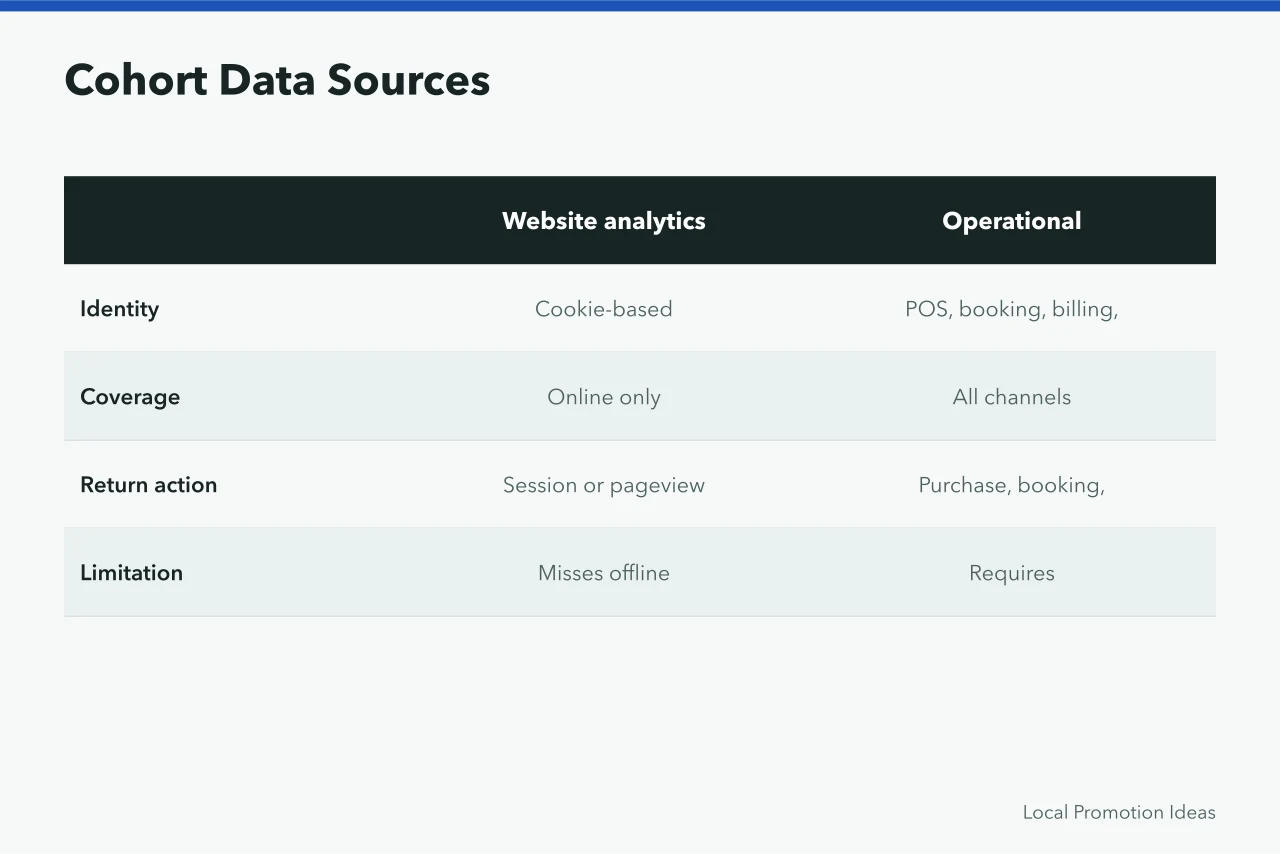
Check website cohort reports against point-of-sale, booking, billing, and CRM records. A website identity may not cover every customer or purchase, so test whether the analytics view is sufficient, using ecommerce analytics practice as a guide. The figure below shows why records from other operating systems may also matter.
- Rule of thumb: Compare like-for-like time windows before drawing a conclusion.
Step 3: Find out why customers leave
If the business has a theory but little direct evidence, ask recently retained, lapsed, refunded, and poor-fit customers about their experience before choosing a fix. Ask what they expected, when value appeared, what caused difficulty, which alternative they chose, and what would have helped them sooner.
Group recurring themes, but keep conflicting answers visible and note the limits of the conversations. A small set of interviews can point to a cause worth testing; it cannot show that every customer left for the same reason. Choose one testable explanation rather than treating a plausible story as a proven diagnosis.
- Rule of thumb: Let conversations shape a test, not stand in for proof.
Step 4: Shorten the time to first value
If a customer waits too long to get the outcome they bought for, shorten the route to that outcome. It could be a first brewed cup, first wear, or completed setup; measure the median days from order to that point using delivery dates, support contacts, and observable use.
Find where delay or failure occurs, then consider clearer setup, instructions, delivery communication, product education, or access to help. A box checklist or delivery-day how-to email may be simpler than a loyalty scheme. Use conversion optimization to inspect the path, rather than assuming another offer will solve the delay.
- Rule of thumb: Make the first useful outcome easier to reach before adding incentives.
Step 5: Repair service failures before selling again
If customers report a late parcel, damaged item, wrong size, or other service failure, resolve the problem before offering a discount. A healthcare-focused service recovery strategy recommends acknowledging the issue, apologizing, listening with empathy, and fixing it fairly and quickly.
That source concerns healthcare, not every business or legal obligation. For an online store, the sequence can inform a response: replace or refund where appropriate, follow up after the remedy, and record the cause. Give staff clear authority, response targets, remedies, and escalation routes, then review resolution, repeat contact, refunds, complaints, and later eligible returns.
- Rule of thumb: Fix the reported problem and record its cause before trying to sell again.
Step 6: Give every message a purpose
If messages go out without a relevant reason, tie them to setup, care, replenishment, renewal, or requested availability instead. A replenishment note sent before a coffee bag runs out has a clear purpose; a weekly promotion may not. Keep consent, channel, market, and opt-out status in the decision.
Rules for commercial email and marketing texts vary. The main regimes are CAN-SPAM in the United States, PECR for UK marketing email and texts, and CASL and PIPEDA where relevant in Canada. Maintain suppression across platforms and vendors, and check the email checklist before sending. Review CASL and PIPEDA guidance when Canadian requirements apply.
- Rule of thumb: Send when the message serves a relevant customer need and is permitted.
Step 7: Recover failed payments with care
If a failed payment may interrupt a subscription or continued access, give the customer a secure way to understand the issue and update payment details. Do not treat a payment failure as permission to charge again, continue service, or override cancellation.
Before automating recovery, check current terms, market rules, notices, security, entitlement, and accounting. Test the notices, refunds, records, accessibility, and cancellation path, and reconcile payment status with service access. The CFPB information on automatic payments can help frame why customer choice belongs in the process.
- Rule of thumb: Use a tested, clearly disclosed payment-recovery path.
Step 8: Test the repair before expanding it
If the team cannot describe what changed or what it cost, do not expand the intervention. Before testing, name the cohort, single correction, primary result, guardrails, cost, stop condition, and decision owner. Judge retained gross profit rather than repeat orders alone, while checking customer effects and operational workload.
When a tool is involved, confirm that customer records, consent status, and order history can be exported. Name the person accountable after launch, keep the old process until a full definition cycle has passed, and review access controls, including who can view records or send messages and how former staff access is removed.
| Decision | Check | Next move |
|---|---|---|
| Measure | Eligible return and natural cycle | Fix the baseline |
| Diagnose | Customer conversations and failure records | Select one cause |
| Repair | Value, service, or payment process | Preserve customer choice |
| Evaluate | Cohort margin and guardrails | Keep, revise, or stop |
Use the strategy checklist and relevant retention metrics to support the review, not replace sound evidence. Privacy obligations and access controls remain part of the work throughout; the small-business marketing plan can help connect a chosen repair to the wider operating plan.
- Rule of thumb: Keep, revise, or stop only after reviewing the result, cost, and guardrails.